






Past Limitations and Modern Conveniences
Once upon a time, going abroad meant a complete change of life.
Flying was a luxury, and sending a letter was a form of communication that could take weeks. People formed deep bonds with the places where they were born, and the feelings of separation and longing were the hardest parts of migration.
The idea of “leaving and never returning” discouraged many from taking that step.
Today, the picture is entirely different.
With the advancement of technology, borders are no longer as defined as they once were. Thanks to the Internet, social media, and video calls, we can stay constantly connected with our loved ones. Being far away no longer means being disconnected. Families have weekly video chats, and grandchildren can have breakfast with their grandparents as if they were sitting at the same table.
Transportation is another major factor driving this transformation.
Thanks to affordable deals offered by airlines, the distance between Europe and Türkiye is now just a few hours — and often cheaper than a domestic trip. Returning home no longer takes years; for many, it happens every few months.
In the past, people would “pour water after someone leaving” — a symbolic wish for a safe journey.
Today, we simply say, “See you soon.”
Migration in the Modern Age: Not Leaving, but Redefining
Today, migration is no longer about leaving; it’s about redefining.
People now move abroad not only for work or economic reasons, but also to improve themselves, to experience different cultures, and to offer their children a broader vision of the world.
Technology has also made access to information and support much easier.
In the past, starting a new life in a foreign country felt like “a journey into the unknown.”
Now, every step — from applying for a visa to renting a home — can be managed through digital platforms.
Online communities, social media groups, and consultancy networks have created strong support systems for newcomers.
In the modern era, migration no longer means “resetting your life.”
It means evolving into a new way of living.
Instead of being distant, we are learning how to belong — just somewhere different.

Life Abroad: Distances Shrunk, Connections Remained
Many people fear being “alone” when they move abroad.
Yet in today’s world, loneliness is no longer a physical state — it has become an emotional choice.
The digital age has removed the barriers to maintaining social bonds.
You can now talk to your family in Türkiye every day, share your children’s milestones, and even join your friend groups from afar.
Zoom birthday parties, online coffee chats, and virtual family dinners have become the new normal.
At the same time, the number of Turkish communities abroad continues to grow.
In countries such as Germany, the Netherlands, and Austria, Turkish associations, cultural events, mosques, and social clubs keep people connected.
Migration no longer means “being far away” — it now means carrying the same identity in different places.
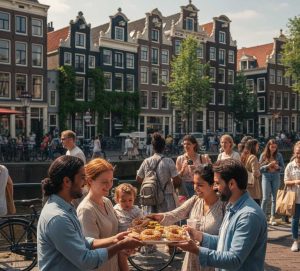
The Realities of a New Life: Adaptation and Balance
Of course, this journey has both emotional and practical sides.
Like every new beginning, living abroad requires a period of adaptation.
In the early stages, language barriers, different habits, and even the variety of products on supermarket shelves can feel surprising.
Yet these challenges are also the most fruitful stages of personal growth.
To adapt to a new environment:
- Take part in local events and communities.
- Observe cultural differences without judgment.
- Share your own culture with others.
- Don’t hesitate to connect with new people.
The secret to living abroad is learning how to grow new branches without losing your roots.
True balance comes from preserving who you are while becoming part of the place you now call home.
Technology and Transportation: The New Architects of Migration
In the past, living in a foreign country required extensive preparation, high costs, and long-term planning.
Today, however, thanks to mobile banking, online document processing, digital education, and remote work opportunities, these processes have become much simpler.
Many people can now attend job interviews before even moving abroad — some even complete online onboarding before starting their new jobs.
The revolution in transportation has also made migration more accessible.
A flight from Istanbul to Berlin now often takes less time than an intercity bus ride.
With frequent airline promotions, the concept of “distance” has almost disappeared.
In the modern age, migration is no longer about crossing physical borders — it’s about overcoming psychological ones.
Migration Is No Longer a Departure, but a Transformation
In the past, migration was a story of separation.
Today, it has become a story of rebirth.
Thanks to technology, transportation, and global connectivity, living abroad no longer means “leaving” — it means “expanding.”
The key element in this journey is purpose.
If your decision to move abroad is guided by your goals rather than your fears, this journey won’t just be a change — it can become the greatest growth of your life.
Remember, borders still exist on the map, but life itself has become global.
So if you have courage, preparation, and vision, you truly can break boundaries and rewrite your life.
